
STAY CONNECTED
Signup for our blog to receive tips and knowledge on industrial wash and wash water treatment best practices.
Work with Us
Don’t settle for less than a solution from a partner who takes complete responsibility from start to finish. We make it easy to keep things clean and compliance effortless. Contact us today to discuss your wash water treatment and industrial wash needs.
07/13/2026
Temporary Jobsite, Permanent Liability: When a Portable Wash Pad Beats a Storm
Your crew mobilizes to a site with a hard end date. Four months, maybe six. You bring the equipment, the operators, and the pressure washer, and you wash where it makes sense: a gravel pad near the yard, graded slightly downhill. The setup holds through a dry stretch. Then a July storm parks over the county and drops several inches in an afternoon. The water sheets across your wash area, lifts the sediment, detergent, and hydrocarbons off the ground, and carries the mix toward the ditch at the property line. That ditch feeds a creek.
You never opened a valve or aimed a hose at that ditch. The rain moved the pollutants for you. But the Clean Water Act draws no distinction between the two.
On a short-term site, a full wash water containment setup can look like more than the job calls for, and that logic holds true most of the year. But storm season changes the calculation. Here’s why a temporary operation carries the same discharge liability as a permanent one, and how a portable wash pad closes the gap without committing you to a permanent build.
Do Temporary Jobsites Have to Follow Stormwater Rules?
Yes. Regulators enforce the discharge, not the lifespan of your project. The Clean Water Act bars anyone from discharging pollutants through a point source into waters of the United States without an NPDES permit, and it defines a point source broadly enough to include a ditch or channel. A wash area that drains to a storm inlet or roadside ditch fits that definition, whether it operates for a decade or a single season.
The activity itself falls squarely inside the rules. Federal regulations at 40 CFR 122.26 list transportation facilities with vehicle maintenance or equipment-cleaning operations as a regulated category of industrial stormwater discharges. Coverage usually runs through your state agency rather than the EPA directly since most states administer their own NPDES stormwater programs, so the specifics vary by where you operate. One point stays constant: the operator who generates the discharge is the responsible party. That holds whether you own the land, lease it, or share it with several other contractors.
Why Does Storm Season Raise the Risk of a Wash Water Violation?
A heavy rain event works against you in two ways.
First, it overwhelms the ground you relied on to absorb or hold wash water. Gravel, bare soil, and a gentle grade handle a garden hose. They cannot handle a wash operation and several inches of rain in the same afternoon. The volume finds the lowest exit and takes your contaminants with it. The EPA describes this plainly: runoff that contacts equipment-cleaning activities picks up pollutants and carries them to a nearby waterway, either directly or through a storm sewer.
Second, a storm creates the kind of visible event that draws attention. Runoff carrying sheen or sediment into a creek can prompt a neighbor’s call. A soap plume in a roadside ditch can catch an inspector’s eye. Routine washing on a dry day rarely draws notice. A storm can carry the same runoff downstream and into plain view.
Timing sharpens the point. NOAA defines the Atlantic hurricane season as running from June 1 to November 30, with activity peaking between mid-August and mid-October. Gulf Coast operators see their exposure rise during the same months as peak summer and fall projects. The weather is outside of your control, but the containment is not.
Should You Build a Permanent Wash Bay or Rent for a Short-Term Site?
Match the solution to the timeline. A permanent wash bay suits a fixed facility that will wash equipment for years, and an Evans build typically runs 30 to 60 days from design to startup. For a jobsite with a defined end date, that timeline and that capital commitment don’t always make sense. Faced with that mismatch, many teams reasonably conclude a permanent build does not fit a short job, and the site ends up without containment by default.
That leaves out a middle option. The real choice is not “permanent bay versus nothing.” It is “permanent bay versus portable containment you deploy now and relocate when the job ends.” Renting containment lets you meet the discharge rules for exactly as long as the site exists, then move the same equipment to your next project. Match the compliance spend to the project duration.
How Does a Portable Wash Pad Keep a Temporary Site Compliant?
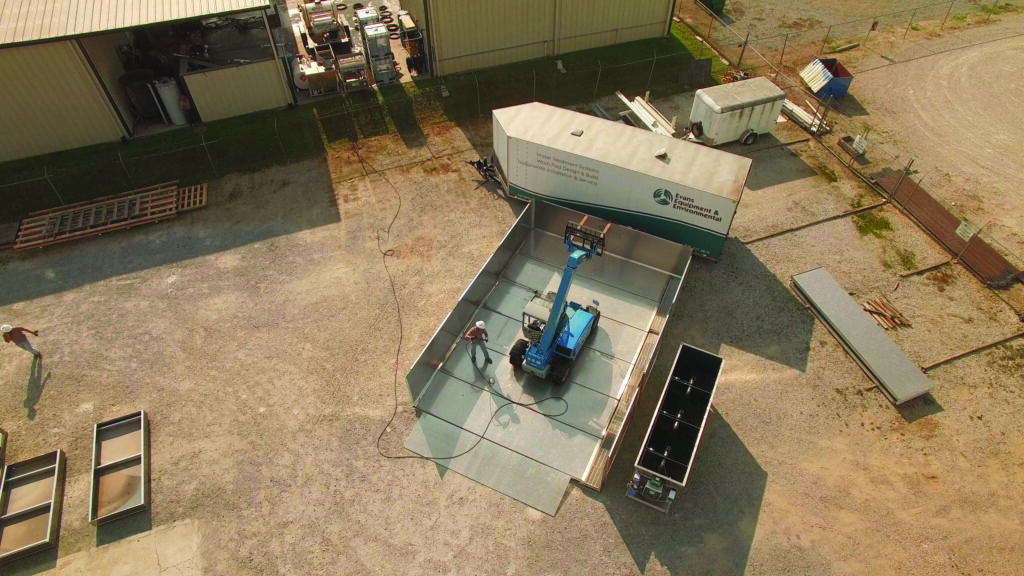
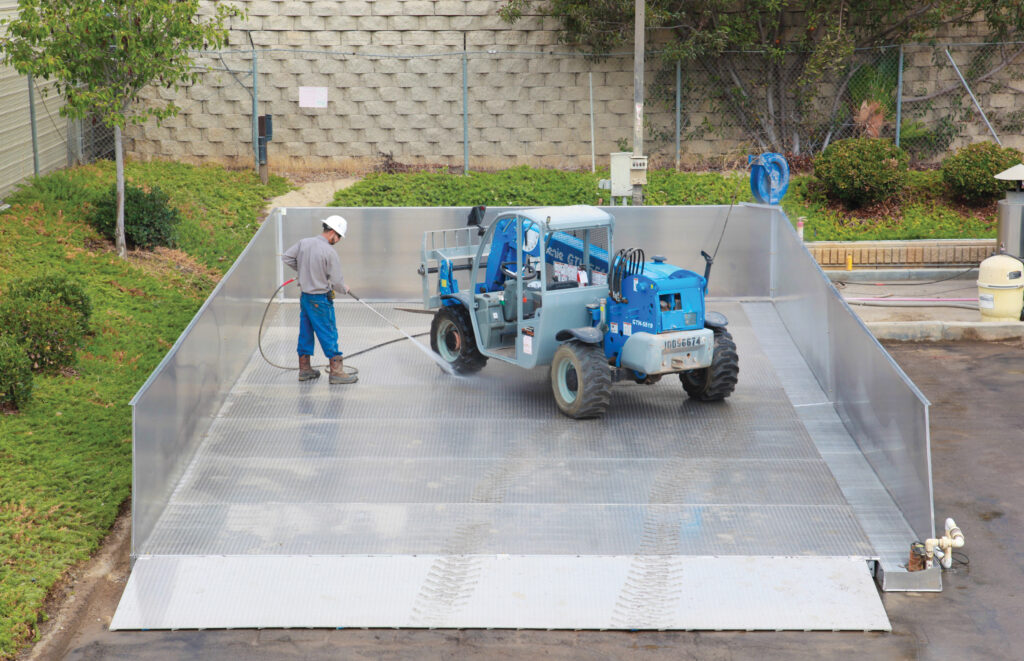
A portable wash pad captures wash water at the point of use. Instead of letting runoff flow into the nearest drain, the pad contains the contaminated water within a defined system. That containment holds up in a storm and protects your operation from an inspector’s citation.
Additionally, the pad deploys far faster than a permanent build and travels with your operation. When the job wraps, the equipment leaves with the crew and redeploys at the next site. Pair it with a closed-loop treatment system, and you also cut the water you haul in and haul out, a cost that runs in the background of every temporary operation.
Evans rents portable wash equipment for this exact situation: the site that has to wash on a schedule, stay covered through storm season, and skip an installation it will never use in that location again.
What Should You Check Before the Next Storm?
Walk your site with four questions before the forecast forces the issue:
- Where does your wash water go right now? Follow the grade from your wash area to its lowest exit. If that path reaches a drain, ditch, or waterway, you have a discharge to contain.
- What rides in the runoff? Sediment, detergents, fuel, oil, and heavy metals increase your liability exposure and your cleanup cost if they leave the site.
- Could one heavy rain overwhelm your setup in an afternoon? If the answer is “maybe,” plan as though it is “yes.”
- How fast could you deploy containment? A permanent bay will not arrive before the next storm. Portable containment will.
Talk to Evans About Storm-Ready Wash Containment
A temporary site is a real reason to skip a permanent build. It is not a reason to skip containment. The discharge rules apply for as long as you operate, and a portable wash pad lets you meet them for exactly that long, then move on to the next job.
If you have a temporary job on your schedule, now is a good time to look at your wash water containment options. Evans can help you find the right setup.
Rent a portable wash pad. See portable wash pad options and rentals built to deploy fast and move with your operation.
Get a recommendation for your site. Request a quote or consultation, and we will walk through your requirements, including permitting.
You can also call Evans directly at (800) 377-5872. One conversation is usually enough to know whether portable containment fits your next job.
Frequently Asked Questions
Often, yes. If you discharge wash water to surface waters, you generally need an NPDES Industrial Stormwater Permit or your state’s equivalent. Discharging to a sanitary sewer usually requires a local pretreatment permit.
Yes. A rented portable wash pad and related equipment fit sites with a defined end date. You meet the discharge requirements for as long as the site runs, then relocate the equipment to your next project rather than leaving a permanent structure behind.
Runoff that carries contaminants to a storm drain or waterway can trigger a violation, whether the discharge was deliberate or storm-induced. Containment prevents that. For the penalty figures behind this exposure, see our breakdown of what an EPA notice actually costs.
We can typically deploy rentals well within a week. In an emergency, we can expedite delivery. A portable system arrives ready to contain wash water, which matters when a storm sits in the forecast and a poured-concrete solution is weeks out.