
STAY CONNECTED
Signup for our blog to receive tips and knowledge on industrial wash and wash water treatment best practices.
Work with Us
Don’t settle for less than a solution from a partner who takes complete responsibility from start to finish. We make it easy to keep things clean and compliance effortless. Contact us today to discuss your wash water treatment and industrial wash needs.
08/12/2026
Choosing the Right Location for Your Wash Bay
Washing your fleet and heavy equipment isn’t about keeping it shiny. Dirt, grease, and road salt hide mechanical problems, wear down components, and cut years off the lifespan of your valuable assets. To combat this, investing in a dedicated wash bay is one of the smartest decisions a facility manager can make.
But a wash bay is only as good as where you put it. Get the location right and traffic flows, install costs stay down, and you stay on the right side of your permits. In the wrong spot, you’re trenching an extra hundred feet of utility line, dealing with drainage issues, or explaining runoff to an inspector. Here’s how to evaluate your site before you pour any concrete.
Start With What You Actually Wash
Before you start pouring concrete or running plumbing lines, get clear on the scope of your operations. What you wash and how much of it decides the space required and the infrastructure the site needs.
First, consider permanent or portable.
- Permanent wash bay: Built for high-volume operations on land you own. Dedicated groundwork, utility trenching, and a footprint that stays put for lengthy jobs.
- Portable wash bay system: Better for leased property or job sites that move. Modular and easy to move when you relocate.
Then size it to your equipment. A wash rack for light-duty trucks needs a fraction of the space than an industrial station handling articulated dump trucks, excavators, and loaders. Understanding these parameters early on will help you narrow down the viable locations on your property.
What to Look for in a Location

Once you know the type of system you need, you can start evaluating specific zones on the property. Here are the key elements to keep in mind.
Space, Traffic Flow, and Accessibility
One of the main benefits of a wash bay is to alleviate the traffic caused by insufficient wash systems or a single, overloaded wash bay. A wash bay should never become the bottleneck everyone has to plan their day around. Look for room to run vehicles through in one direction, in one side and out the other. No one should need to back a loader past foot traffic.
Account for the bay’s footprint plus the turning radius of your biggest machine. Washing earthmovers means building a containment pad sized to keep every gallon and every clod of debris inside the wash zone.
Utility Proximity
Trenching is notoriously expensive. The farther your bay sits from existing water, power, and sewer tie-ins, the more you pay to reach them. Heavy equipment usually requires high-capacity water lines and three-phase power, so position the bay where those connections are already close. Consider access to sanitary sewers if you plan to discharge treated water.
Environmental Regulations and Zoning
This is the most important factor to consider. Site a wash bay next to a storm drain or a sensitive waterway, and one bad runoff event can cost you more than the whole build.
Industrial wash water carries oil, heavy metals, and suspended solids. Whether your operation plans to recycle it on-site or discharge treated water to the sanitary sewer, it cannot escape to a storm drain. Check your municipality’s rules before you commit to a location.
Drainage and Water Management
Water management is the crux of an effective wash bay operation. If the location you choose has poor natural drainage or a high water table, your excavation and site-prep costs will skyrocket.
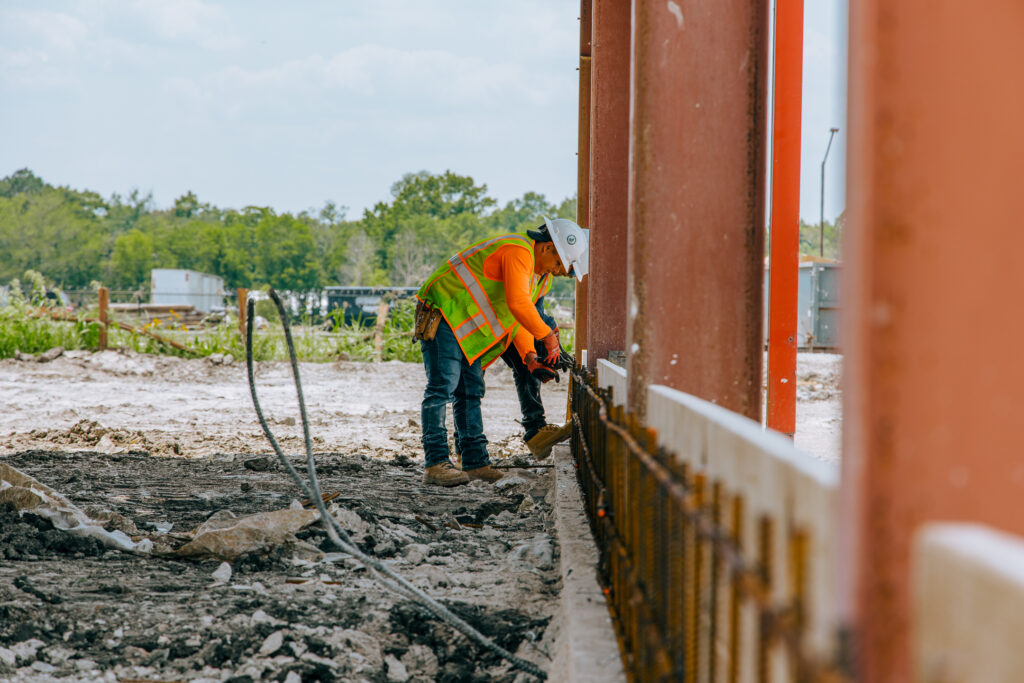
The rule is simple: zero untreated wash water leaves the perimeter. To hold that line, grade the slab to move water toward a central trench drain or catch basin. This is usually a 2% slope. That’s enough to keep water moving without pooling, which also keeps the surface from turning into a slip hazard.
Then that water needs somewhere to go. A well-placed location should have adequate adjacent space to house your wastewater reclamation system. A closed-loop setup that recycles on-site can cut fresh water use by up to 80% and take your discharge headaches off the table entirely.
You’ll also want space for an oil-water separator, which uses gravity to pull free oil and grease off the water before the next stage. Separators get pumped and cleaned out by vacuum trucks on a schedule, so they must be located in an area with easy access for maintenance vehicles.
Designing for Equipment and Efficiency
The site almost always has to hold more equipment than the pad. Leave room for an equipment room or an enclosure to protect the pumps, controls, and treatment gear that powers the wash.
Choosing Your Cleaning Method
Your footprint shapes how you clean.
- Automatic systems: Rollover or touchless arches require a long, narrow lane and specific pacing zones, good for cleaning uniform fleets fast.
- Manual systems: Crews working with handheld pressure washers typically need less specialized infrastructure and give you the flexibility to hit the joints, tracks, and tight spots on oddly shaped machines.
Advanced Wash Technologies
If your fleet runs through salt or chemical exposure, underbody chassis cleaning systems mounted in the floor can blast corrosive buildup off the undercarriage while vehicles roll slowly over them. They take deep trenching, so your location has to allow for it.
Chemical Storage and Handling
Industrial cleaning requires serious chemicals, like degreasers, foaming agents, and aluminum brighteners. Those have to live in a dry, temperature-controlled spot with secondary containment for spills. Make sure the location has room for a secure, accessible storage shed or room.
Maintenance Access
Everything you install eventually needs a wrench on it. Don’t crowd your tanks, pumps, and separators against a wall or fence. If possible, leave at least three feet of clearance on all sides, so a tech can change filters, service pumps, and run inspections without tearing the setup apart.
Budgeting and Long-Term Costs
In the end, where you put the bay drives what it costs to build. A spot that looks perfect can hide expensive surprises underground. Additional costs might include retaining walls, land grading, or hundreds of feet of trenching on the invoice. Push it too close to the office, though, and you trade utility savings for noise, humidity, and overspray on the people trying to work.
The spot you want is:
- Far enough from offices to keep noise and humidity away from staff.
- Close to your main traffic routes for easy vehicle access.
- Close to existing utilities to keep trenching short.
- On stable, level ground to hold down excavation and grading.
Before you commit, spend a little to save a lot: hire a utility locating service to map what’s underground, and bring in a civil engineer to test soil stability. A few thousand up front beats tens of thousands in surprise excavation.
The Location Is the Foundation
A well-built wash bay more than earns its keep with longer equipment life, cleaner compliance, and less downtime. But much of the return on investment depends on where you put it. Balance traffic flow, utility access, compliance, and room for water treatment, and the site does half the work for you.
Select the location like the foundation it is. Plan the drainage, leave room for treatment, and build it.
Not sure your site can handle it? Evans designs and builds wash bays and closed-loop treatment systems around your flow rates, footprint, and compliance requirements. Work with one team, from first walk-through to commissioned bay.
Talk to an Evans specialist about your site.
Frequently Asked Questions
The best spot balances four things: smooth vehicle access, short utility runs, distance from storm drains and sensitive areas, and stable, level ground. Nail those, and you keep both install costs and compliance risk down.
Permanent wash bays suit high-volume operations on owned land, where dedicated groundwork and utilities make sense. A portable wash bay system fits leased property or job sites that move; they’re modular, aboveground, and easy to transport. Your volume, your lease, and your timeline decide it.
Around 2%, or roughly a quarter inch per foot, graded toward a central trench drain or catch basin. That moves water fast enough to prevent pooling and slip hazards without over-complicating the pour.
No. Industrial wash water carries oil, heavy metals, and solids, so it has to be captured and treated. From there, you recycle it on-site or, if local rules allow, send treated water to the sanitary sewer. A closed-loop system skips the discharge question entirely by reusing the water.
Leave at least three feet on all sides of tanks, pumps, and separators. Techs need that room to change filters, service pumps, and run inspections. Plus, vacuum trucks need a clear path to the separator for cleanouts.