
STAY CONNECTED
Signup for our blog to receive tips and knowledge on industrial wash and wash water treatment best practices.
Work with Us
Don’t settle for less than a solution from a partner who takes complete responsibility from start to finish. We make it easy to keep things clean and compliance effortless. Contact us today to discuss your wash water treatment and industrial wash needs.
09/14/2026
Bean Pump for Sale or Rental: How to Choose the Right One
When dealing with heavy contamination, a high-pressure bean pump is often the best equipment to get you through it. The harder question is whether to look for a bean pump for sale to keep on site or cover the work with a bean pump rental instead. The right answer largely depends on how often you run the pump and what pressure and volume your work demands. In this guide, we’ll cover how a bean pump works, how to decide between buying and renting, and the best maintenance tips once you have it.
How Does a Bean Pump Work?
A Bean pump is a reciprocating plunger pump. Inside, a smooth cylindrical plunger slides back and forth through a stationary high-pressure seal. Each stroke pulls water into the chamber and then forces it out under pressure. Because the seal stays fixed while the plunger moves through it, this design holds up at higher pressures than the average piston pump, which is why Bean Pumps are common on sewer, jetting, and heavy wash-down work. You may sometimes see one called a bean water pump, but it is the same reciprocating plunger design.
The name goes back to John Bean, who built the first commercial agricultural spray pumps in 1883. Then, the company moved through several names, including Bean Spray Pumps, Food Machinery Corporation (FMC), and John Bean Technologies (JBT), while the equipment kept the shorthand most operators still use: the Bean pump.
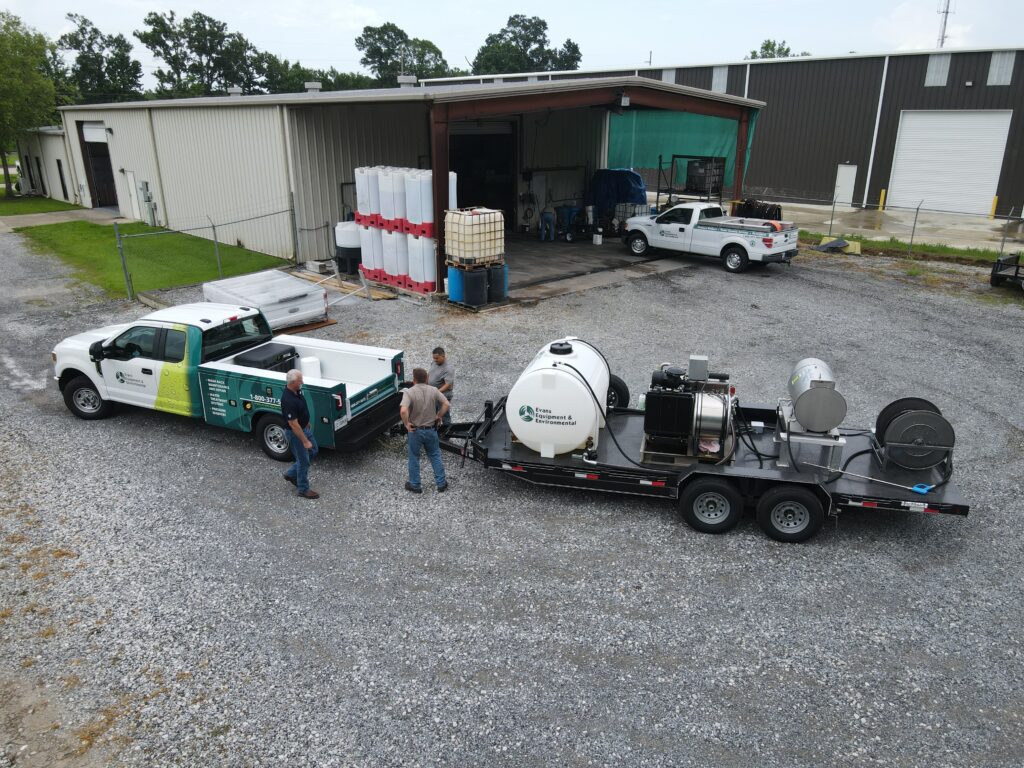
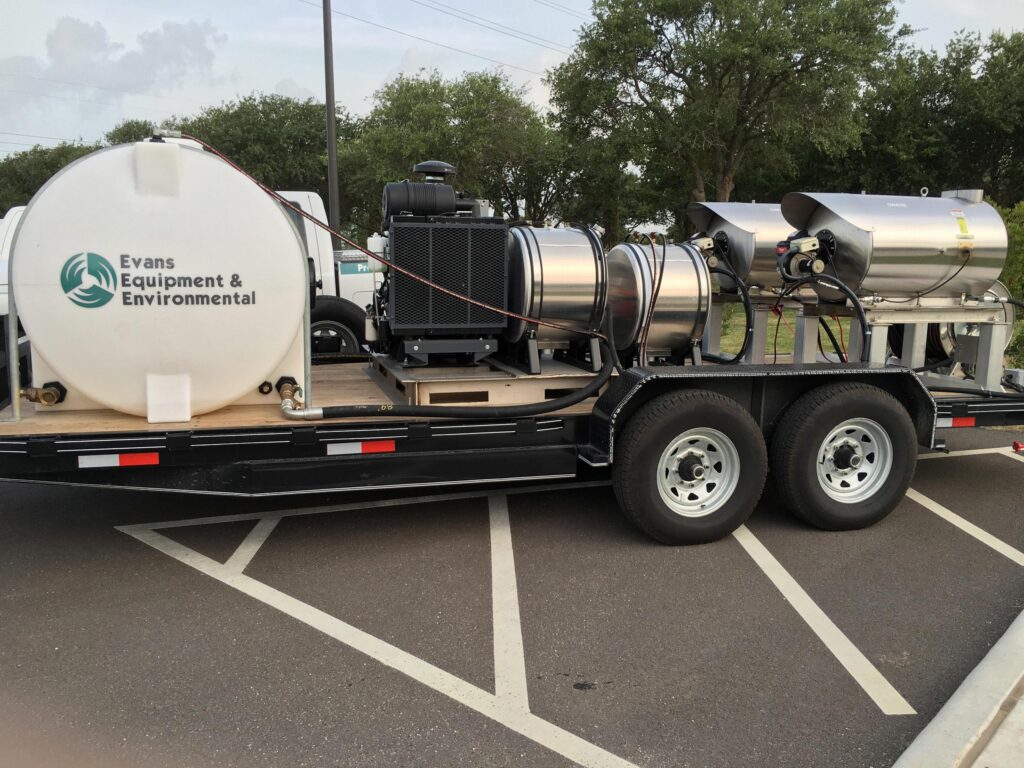
If you have ever asked how a Bean pump works on a job site, the Evans portable package is a useful reference point. It runs 3,000 PSI at 23 GPM, handles water temperatures up to 180 degrees, and mounts on a heavy-duty tandem-axle trailer, so it can move site to site. Sewer nozzle options and a choice of adjustable-pattern spray guns or long lance guns let you match the output to the surface you are cleaning. That setup typically covers tank cleaning, barge flushing, hydro-excavation, pipe cleaning, and trench digging.
Buying vs. Renting: What Makes Sense for Your Job?
Like any other asset, the choice between a Bean pump rental and a purchase comes down to how much you will use the equipment. Is it cost-effective for your jobs?
Buying makes sense when the pump is part of your regular workload. If you are running high-pressure cleaning most weeks, owning the unit spreads the cost over years of use and keeps a pump on hand the moment a job comes in. There’s no waiting on rentals. Plus, you also control the maintenance schedule and know the exact condition of your equipment at all times.
A Bean pump rental fits a different pattern. If your high-pressure work is seasonal or tied to a single project, renting keeps you from parking capital in a machine that’s just going to sit idle or collect maintenance issues between jobs. It also lets you scale up for a large job without committing a permanent addition to your fleet.
Flexible Operations: Rent First, Then Buy
Many operators take the middle ground, renting for a time while they solidify the job scope or expand operations, then purchase when it’s cost-effective. Running a rental unit on your own site shows you whether the pressure output and trailer setup fit your work before you commit to a purchase. If the fit is right, you move to the buying stage with confidence that your equipment can stand up to the job.
Here are two important questions to consider:
- How many days a year will the pump run?
The more days, the stronger the case for buying. Investments in equipment often amortize as the project scopes expand.
- How predictable is that schedule?
Steady demand favors ownership. But if your jobs are uneven, or you’re engaged in many one-offs, then your demand will work better with a rental unit. Weigh the costs of storing the Bean pump and maintaining it yourself. It’s likely cheaper to rent.
What Bean Pumps Evans Stocks
At Evans, we stock Bean pumps built by Giant and powered by Kubota engines. You can get one skid-mounted for a permanent station, set up stationary for a fixed location, or mounted on a trailer for a portable setup that moves with the job.
As a nationwide service provider, Evans allows you to customize the rental terms and match the Bean pump to the length of your jobs. Evans also provides scheduled maintenance programs for parts we rent and sell, plus those we don’t. Get on our maintenance route.
How to Keep a Bean Pump Running
A Bean pump is a wear-and-maintenance machine. The parts under the most stress are the plungers, the packing, and the seals they slide through. The valves that direct flow on each stroke wear as well. As those components wear, pumping performance drops before a part necessarily fails outright, so staying ahead of the wear is what keeps a unit dependable.
Common Bean pump parts include plunger seals and packing, valve assemblies, and rebuild kits that bundle the worn items for a scheduled service. When you are pumping abrasive or contaminated water, seals and valves wear faster, so inspection intervals are critical. Watching for a drop in pressure, or water showing up where it should not be, will flag a problem early.
Keeping spare wear parts on hand shortens downtime when a seal or valve goes. A rebuild done on schedule costs far less than a pump run to failure. You’ll save in parts and downtime.
Get a Bean Pump Quote: Sale or Rental
Whether you need a Bean pump for sale for your own yard or a Bean pump rental to cover a project, we can help you match the equipment to the job. Call Evans Equipment & Environmental at 1.800.377.5872 or request a quote to talk through your pressure and site requirements.
No. A bean pump is a reciprocating plunger pump, where a plunger slides through a fixed seal to build pressure. A diaphragm pump moves fluid by flexing an elastic membrane in and out rather than sliding a plunger through a seal. Both move a set volume with each cycle. Plunger pumps handle high-pressure jetting and wash-down, while diaphragm pumps are generally chosen for lower-pressure applications.
It depends on the model. Plunger pumps as a category operate across a very wide pressure range, and Bean pump models vary a lot: some high-volume units move around 35 GPM at roughly 700 PSI, while a jetting-focused package runs far higher pressure at lower flow. The Evans portable Bean pump package is rated at 3,000 PSI and 23 GPM, which covers most industrial tank and hydro-excavation work. Match the pressure and flow to the surface and contamination you’re dealing with.
Yes. Evans rents and sells portable Bean pump packages, so you can run a rental on your own site and confirm the fit before you commit to a purchase. Many buyers rent for a project or a season first, then buy once they know the pressure output and trailer setup match their work.