
STAY CONNECTED
Signup for our blog to receive tips and knowledge on industrial wash and wash water treatment best practices.
Work with Us
Don’t settle for less than a solution from a partner who takes complete responsibility from start to finish. We make it easy to keep things clean and compliance effortless. Contact us today to discuss your wash water treatment and industrial wash needs.

11/16/2026
Installing a Wash Pad at -40°F: Field Notes From Prudhoe Bay
Project Summary
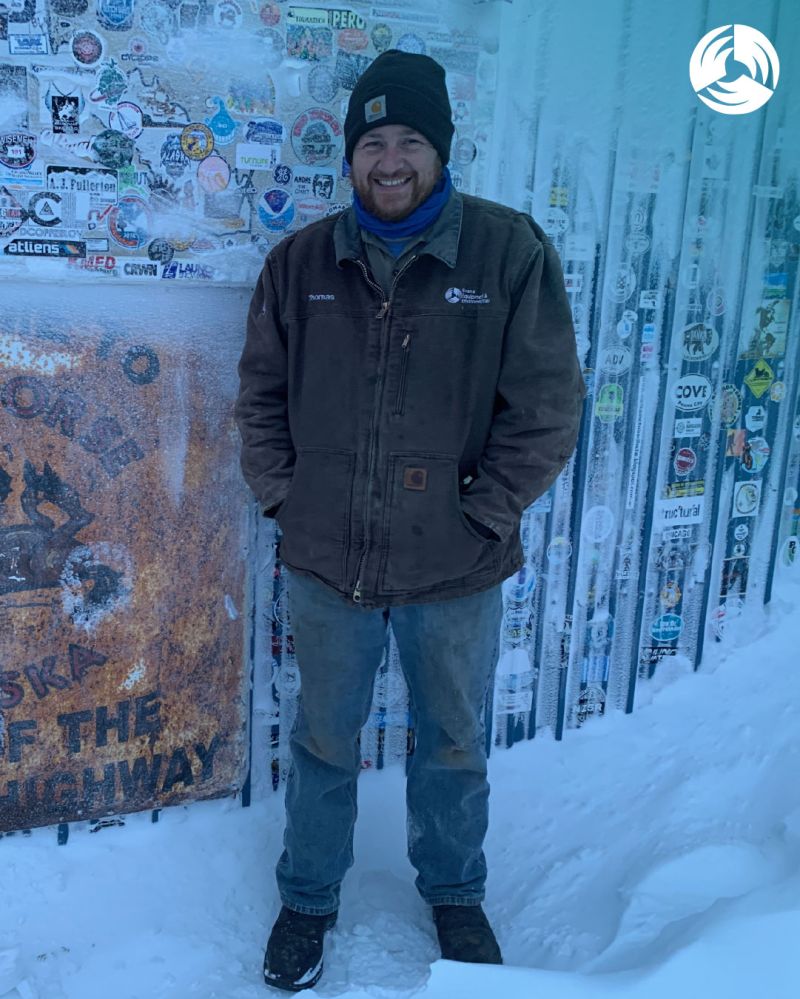
In March 2021, Evans Lead Technician Thomas LeBlanc installed a portable wash pad and Evans Bio System for an oilfield customer at Prudhoe Bay, Alaska. Outside the building, temperatures held near -40°F all week.
Freezing cracked the system’s process pump before commissioning. Thomas and the customer’s site contact patched it on the spot, finished the install, and trained the crew. He left with the system running.
The job carries a lesson for any operation that washes equipment in the cold: freeze protection starts before the equipment ships, and it continues every day the system runs.
What did the customer need?
The customer needed to wash heavy equipment on site, keep every gallon of wash water contained, and stay compliant with wash water regulations. Prudhoe Bay sits 250 miles north of the Arctic Circle and 650 miles north of Anchorage. Hauling wastewater out, or hauling freshwater in, costs significant time and money at that distance.
Fresh water was scarce even on site. The building’s storage tanks served its own supply, so the wash system had to recycle what it used.
A portable wash pad paired with a closed-loop treatment system fit those constraints:
- Minimal site work: The pad needs a flat piece of ground and access to power. No extensive plumbing or construction.
- Contained water: A raised treadplate floor, a collection trough, and up to three splash walls capture wash water.
- Recycled water: The Evans Bio System filters, treats, and returns wash water to the pad, extending service where fresh water is limited.
- Mobility: In hard-to-reach, remote locations, the pad moves on a trailer without special oversize permits.
- Overhead access: The open top removes height limits and allows crane access.
Standard pads come in marine-grade aluminum or steel, 10 or 20 feet wide, in any length in 5-foot increments. Rated capacity reaches 64,000 lbs for aluminum and 80,000 lbs for steel (4-wheeled vehicle).
Why did the install happen in an Arctic winter?
The equipment shipped in summer. Customs and shipping delays held it up for months, and it reached Prudhoe Bay in March, when the average March low is -22°F.
The pandemic complicated the trip. Thomas spent roughly 20 hours in transit, across multiple flights and delays, under strict travel guidelines. On arrival, he completed the site’s safety training before touching the equipment.
The crew set up the system inside one of the site’s buildings. Outside, temperatures reached -40°F throughout the week.
“This was my first opportunity to travel that far out with Evans, and it was an experience I’ll always remember. While we were working indoors, the temperatures outside reached -40°F throughout the week,” said Thomas LeBlanc, Lead Technician and Installer.
What happens to a process pump at -40°F?
Water left inside a pump freezes, expands, and splits the housing. Ice occupies about 9% more volume than the water it formed from. So trapped in a rigid casing, that expansion builds pressure until metal cracks, seals fail, or lines burst. Sometimes the damage isn’t apparent until the system runs. A single freeze can leave small cracks that worsen under operating pressure.
That’s what happened at Prudhoe Bay. Because the building’s tanks were reserved for its own supply, the crew trucked in water from another location to fill and test the system. Testing revealed that the process pump had cracked from the extreme cold.
How do you fix a cracked pump 650 miles from Anchorage?
You improvise with what the site has. The customer’s site contact and our technician ground down the damaged section of the pump housing and patched it with a brazing rod. The patch held the system in service while Evans shipped a replacement pump.
A field fix like that depends on knowing the system end to end. Evans designs its wash pads and treatment systems, builds them, and maintains them through its service and maintenance programs. Thomas installs the same equipment he services, so he could judge how the pump fit into the treatment loop and what a temporary repair needed to carry until the new part arrived.
With the patch in place, Thomas completed the installation, trained the customer’s team on the system, and left Prudhoe Bay with the equipment operating.
“It was a challenging project, but a rewarding one.” – Thomas LeBlanc
How do you winterize a portable wash pad and treatment system?
Keep the treatment equipment above freezing, drain every exposed line, protect the pressure washer, and keep the treatment system powered. Find more help in the full guide, How to Winterize Your Industrial Wash Systems and Water Treatment Equipment.
- Hold the container or building above 32°F.
Built-in heaters deliver a fixed BTU output and can fall behind in a severe cold snap. Add supplemental heat when needed, check the temperature daily, and consider a low-temperature alarm or remote thermostat. At Prudhoe Bay, commissioning indoors kept the treatment system workable at -40°F.
- Drain external lines and remove standing water.
Open every drain valve and let gravity work. Clear quick-connect and pneumatic fittings with compressed air, staying within the fittings’ rated PSI.
- Insulate exposed plumbing.
Wrap PVC, copper, and steel lines, valves, hose connections, and pump inlet and outlet lines with foam sleeves or pipe wrap. Insulation adds resilience to the equipment, but it does not replace draining.
- Run -20° windshield washer fluid through the pressure washer.
Pour colored fluid into the float tank and run the unit with the wand open until colored fluid exits. Evans recommends washer fluid over automotive antifreeze for pressure washer components.
- Keep the treatment system powered on.
The Evans Bio System depends on continuous circulation and aeration. Shutting it off lets water stagnate and raises the freeze risk inside tanks and treatment chambers.
- Drain pumps before equipment ships or goes into storage.
Freight can sit in unheated yards for weeks. Any water left from factory testing becomes ice in transit.
These steps reduce risk; they do not eliminate it. Weather, usage, and configuration vary by site, so freezing conditions call for daily attention.
Need a wash pad where nothing is built yet?
Evans delivers turnkey portable wash pad systems nationwide, from the Gulf Coast to Alaska’s North Slope. Five regional service centers in Baton Rouge, Lafayette, New Orleans, Houston, and Corpus Christi anchor a team that supports projects across the United States.
A portable wash pad from Evans gives you:
- A self-contained wash station on any flat ground with power
- Marine-grade aluminum or steel, 10 or 20 feet wide, any length in 5-foot increments
- Drive-thru or three-wall layouts, with splash walls
- Capacity up to 64,000 lbs (aluminum) or 80,000 lbs (steel)
- A closed-loop match with the Evans Bio System and industrial pressure washers
One team designs, installs, and services your system, and the same team shows up when something breaks.
Call (800) 377-5872 or request a quote. Tell us where your project is and what you wash, and we’ll scope a system for your site and climate.
Frequently Asked Questions
It depends, but typically it’s possible with freeze protection in place. Keep the treatment equipment in a heated container or building above 32°F, drain and insulate exposed lines, and keep the treatment system powered.
All we need to place a portable wash pad is a flat piece of ground and access to power. The pad requires no extensive plumbing or construction.
Yes. The pad travels on a trailer without special oversize permits, so we can transport it to follow your work to the new job site.
Our aluminum pads are rated to 64,000 lbs and steel pads to 80,000 lbs, both for a 4-wheeled vehicle.
No. The Evans Bio System relies on continuous circulation and aeration. Powering it down lets water stagnate and makes freezing more likely.
It filters, treats, and reuses the same wash water, so the pad draws little fresh water and discharges none. That matters on remote sites where water must be trucked in.
Shut the system down and call a qualified technician. A field repair can likely keep a system running until a replacement arrives, but the damaged pump should be replaced.